
How to play Gladio Mori
Quick answer
Advertisement
Gladio Mori is a physics fighting game with no health bars. You win by damaging the body where it matters: cut uncovered limbs, angle your blade along its edge, and aim for the head, arteries and vitals. Pick a weapon you can actually control, keep moving, and start in the solo campaign before you jump into online arenas.
Start with the fight loop below, then account for the arena under your feet. The 1.0.4.2 Dungeon addition is especially unforgiving of movement that carries you off a narrow path.
Dungeon arena: leave room to stop
Dungeon, added in 1.0.4.2, funnels fighters across narrow stone bridges into a tight arena, with acid pools around the route. Establish your footing before beginning a move: an attack that carries you forward can be the wrong choice near an edge even when its weapon reach is useful.
Use the approach to learn how far your own movement and attack travel. Re-centre on the stone path before committing to another exchange, and leave yourself room to recover after a missed swing. The new Prisoner's Machete has its own moveset; try that supplied motion before transplanting a favourite attack into it.
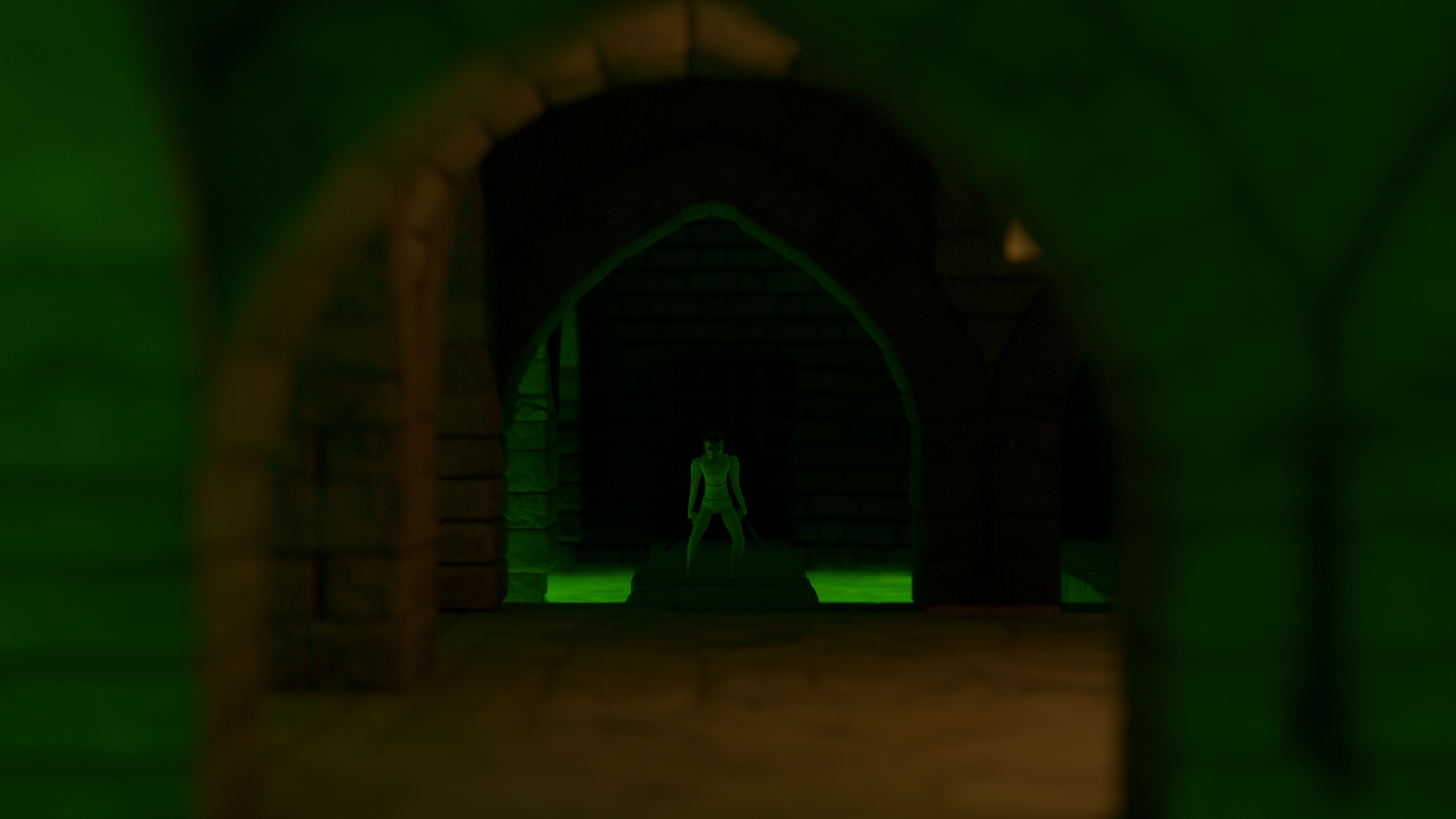
The arena is permanent in the full game. Demo access is part of the rotating extra arena/moveset selection, so availability in a past video does not guarantee the same demo menu today. See weapons and the demo rotation and the new mask's point cost.
The core loop of a fight
Every Gladio Mori fight is the same conversation: you and your opponent both want to land a hit on a body part that matters, while keeping your own vital areas away from their weapon. There are no health bars, so "trading hits" is not a strategy — the only hit points that exist are organs.
- Pick your range. Weapons decide how fights start. A spear or halberd wants to stab from outside; a gladius or knife has to get inside that reach first.
- Watch the angle. Blades cut along their sharpened edge. Swing flat and you slap; line the edge up and the same attack opens a limb.
- Go for structure. Unarmored arms and legs are the training-wheels targets. Injure a sword arm and your opponent's damage output drops; cut a leg off and the rest of the fight gets very one-sided.
- Finish through offense or attrition. A vital hit ends it instantly, and so does bleeding from a severed artery — but bleeding takes time, so pressure the wound instead of backing off.
- Regear between rounds. Loadouts, armor and movesets persist into the next fight — the armor guide covers how weight and coverage trade off.
Combat basics that are not obvious
- Blunt weapons crack and stagger; blades cut. Blunt damage breaks bones and staggers opponents, which lets you push the next hit. Blades reward precision: the same swing that does nothing at a bad angle can take an arm off at a good one.
- Armor works where it covers. Plate stops strikes where it sits, and every gap stays a target. Shooting for the armpit or the neck is normal play, not cheese.
- The head is the high-risk high-reward target. A head hit can end things through the brain or a major artery, but helmets and movement make it the hardest consistent target in the game.
- Play the ground and the walls. Fights happen in arenas with terrain; being backed against a wall removes your escape options and makes dismemberment attempts much more dangerous for you.
Picking up a weapon
There is no dedicated pickup button — a weapon enters your grip when your hand makes contact with its handle. This is the launch community's confirmed answer to a thread that opened with "I thought it was impossible," so don't hunt for an interact key that doesn't exist.
- The reliable way to do it on purpose: map a fist strike (hammer fist) to an easy input, then strike with your hand right on the weapon. The r/gladiomori thread that worked this out maps Action 15 to the right stick for it.
- Grip is your choice: weapons go in normal or reverse grip — the thread's favorite is a reverse-gripped sword into a right sweep.
- It happens mid-fight, not in menus: a grabbed weapon behaves like a new moveset — for the unarmed (Pugilist) moveset, your punches then control the weapon in your hand.
Choosing a first weapon
The honest answer is that the easiest weapons to start with are the ones with reach: spear, halberd and other polearms let you threaten people before they can threaten you, and their basic movesets already work. Longswords and katanas sit in the middle — the standard duelist pick. Maces and other blunt weapons are forgiving because staggering does not require a perfect edge angle. Starting unarmed (the Pugilist moveset) teaches range and defensive play but is genuinely harder — see the weapons list for the full breakdown.
Solo first, then online
The campaign is the safest place to learn: fights are paced for you, and you can experiment with loadouts and custom moves without an audience. When you move online, expect the same rules with better players — duel pads and lobby options are covered in the multiplayer guide. Note that there is no co-op campaign; "Is there co-op?" is one of the most common questions in the Steam discussions, and the answer as of 1.0 is that online play is arena-based PvP.
First-session mistakes to avoid
- Spamming attacks with no angle. In this game, a fast swing at a bad angle is worse than a slow swing at a good one.
- Ignoring stamina and muscle damage. Injured muscles make your own swings weaker — if your arm feels slow, it can be because it is damaged, not because you mistimed anything.
- Chasing the dismemberment. Cutting a limb off is spectacular and often not the fastest winning line; bleeding out a target you already cut is.
- Never testing your moveset. Custom moves that look great in the editor can behave differently in a live fight — test in the campaign or a private lobby first.
Where to go next
- Understand the body model first: Damage System
- Build your own attacks: Move Editor
- Keybinds and settings: Controls & Settings
- Pick a main weapon: Weapons List
- Common questions answered short: Tips & FAQ